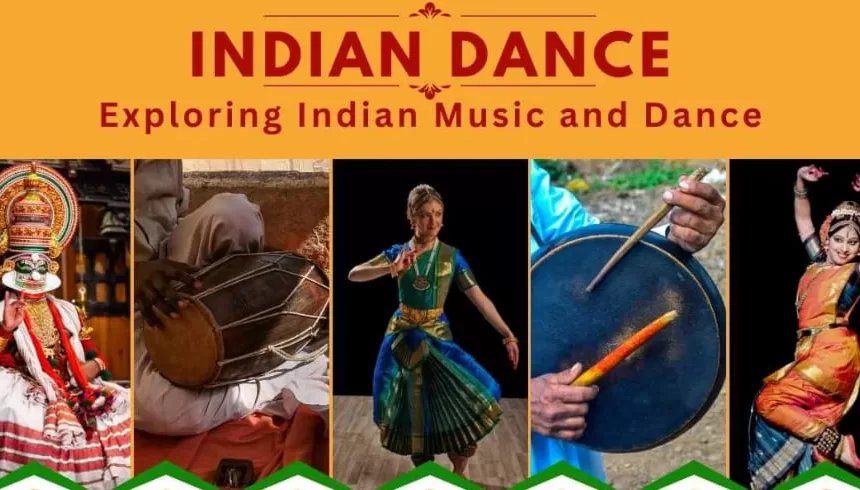
India has a rich tradition of classical and folk dance forms, each deeply rooted in the country’s diverse cultural, religious, and social practices. Here’s a breakdown of some major Indian dance forms and their cultural significance:
Classical Dance Forms of India
These are traditionally performed in temples or royal courts and are based on the Natya Shastra, an ancient treatise on performing arts.
Bharatanatyam (Tamil Nadu)
- Significance: One of the oldest classical dance forms; originally performed in temples as an offering to deities.
- Cultural Roots: Deeply spiritual, representing stories from Hindu epics like Ramayana and Mahabharata.
Kathak (Uttar Pradesh)
- Significance: Evolved from temple rituals to Mughal court entertainment.
- Cultural Roots: Blends Hindu devotional themes with Persian and Mughal influences.
Kathakali (Kerala)
- Significance: Highly stylized form known for elaborate costumes and makeup.
- Cultural Roots: Enacts stories from epics like Mahabharata, traditionally performed in temples.
Mohiniyattam (Kerala)
- Significance: Graceful, feminine dance traditionally performed by women.
- Cultural Roots: Named after the female form of Lord Vishnu—Mohini; expresses spiritual themes.
Kuchipudi (Andhra Pradesh)
- Significance: Originally performed by male Brahmins as part of temple rituals.
- Cultural Roots: Devotional themes, often centered on Lord Krishna.
Odissi (Odisha)
- Significance: Known for its sculpturesque poses and temple origin.
- Cultural Roots: Closely linked to Jagannath cult; devotional expression.
Manipuri (Manipur)
- Significance: Reflects spiritual themes, especially Vaishnavism.
- Cultural Roots: Celebrates stories of Lord Krishna and Radha through lyrical movements.
Sattriya (Assam)
- Significance: A monastic dance form performed by male monks in satras.
- Cultural Roots: Created by Vaishnava saint Srimanta Sankardev; focuses on Krishna bhakti.
Folk Dance Forms of India
Folk dances are community-based and reflect the daily life, festivals, and traditions of rural India.
Bhangra/Gidda (Punjab)
- Significance: Celebrates harvest and festive occasions.
- Cultural Roots: Vibrant and energetic; Bhangra by men, Gidda by women.
Garba/Dandiya (Gujarat)
- Significance: Performed during Navratri to honor Goddess Durga.
- Cultural Roots: Devotional and celebratory dance with rhythmic patterns.
Lavani (Maharashtra)
- Significance: Performed to folk or devotional songs; a form of storytelling.
- Cultural Roots: Blend of music, dance, and drama often focusing on social issues.
Ghoomar (Rajasthan)
- Significance: Performed by women during festivals and weddings.
- Cultural Roots: Symbol of Rajasthani grace and culture.
Chhau (Odisha, Jharkhand, West Bengal)
- Significance: Martial dance form with mythological themes.
- Cultural Roots: Uses masks and acrobatic movements to narrate epics.
Yakshagana (Karnataka)
- Significance: Dance-drama performance combining dance, music, and dialogue.
- Cultural Roots: Enacts stories from Hindu epics, often performed in village squares.
Cultural Significance
- Spiritual Expression: Many dance forms are acts of devotion, used to worship deities.
- Storytelling: They preserve mythologies, legends, and local folklore.
- Community Identity: Folk dances bind communities through shared tradition.
- Cultural Transmission: Dance is a vital means of passing on values and history.