
India’s history is written not just in books but carved into the very rocks of its landscape. Among the country’s greatest artistic and architectural treasures are the Ajanta and Ellora Caves, nestled in the Sahyadri Hills of Maharashtra. These ancient rock-cut caves are more than just archaeological wonders—they are windows into centuries of devotion, craftsmanship, and cultural exchange.
Let’s uncover some fascinating facts about these UNESCO World Heritage Sites that continue to awe historians, tourists, and art lovers from across the world.
1. They Are Over 2,000 Years Old
The Ajanta Caves date back as far as the 2nd century BCE, with additions made until the 6th century CE. The Ellora Caves were constructed between the 6th and 11th centuries CE. That means these caves have been around for more than two millennia, surviving the rise and fall of empires and continuing to impress modern visitors with their intricate detail.
2. Entirely Carved by Hand from Rock
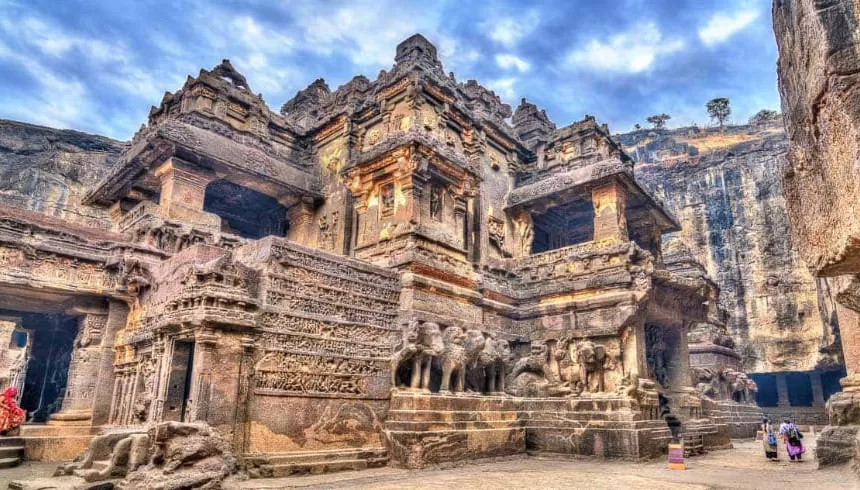
What makes these caves truly mind-blowing is that they were not constructed, but carved into basalt rock cliffs using primitive tools like hammers and chisels. There are no bricks or building materials—just pure artistry, etched into stone. At Ellora, especially, the Kailasa Temple (Cave 16) is carved from a single rock and is the world’s largest monolithic structure.
3. Ajanta is All About Buddhism
The 30 caves at Ajanta are solely dedicated to Buddhism. They include chaityas (prayer halls) and viharas (monastic residences). The murals and sculptures depict scenes from the Jataka Tales, which recount the previous lives of the Buddha. These artworks offer a glimpse into Buddhist religious beliefs, daily life, and even fashion of that era.
4. Ellora Represents Religious Harmony
Unlike Ajanta, Ellora Caves showcase three major religions—Buddhism, Hinduism, and Jainism. The complex has 34 caves in total:
- Caves 1–12 are Buddhist
- Caves 13–29 are Hindu
- Caves 30–34 are Jain
This religious diversity within a single site is a powerful symbol of India’s long-standing tradition of coexistence and tolerance.
5. Rediscovered After Being Forgotten
For centuries, Ajanta and Ellora lay forgotten, swallowed by jungle and time. It was only in 1819 that a British officer named John Smith stumbled upon Ajanta during a tiger hunt. What he found was a treasure trove of ancient art and architecture hidden in the wilderness. Since then, the caves have been meticulously studied and preserved.
6. Ancient Murals That Still Dazzle
Ajanta is renowned for its ancient murals and frescoes, many of which have miraculously survived the passage of time. These paintings depict not just religious themes, but also court life, dancers, musicians, and even glimpses of nature. What’s fascinating is that the artists used natural dyes and plant extracts—a testament to their skill and resourcefulness.
7. Kailasa Temple is Bigger Than You Think
The Kailasa Temple at Ellora is an engineering marvel. It was carved from top to bottom (unlike most structures built bottom-up), and an estimated 200,000 tons of rock were removed to create it. Some believe it would have taken thousands of laborers over two decades to complete, and it remains one of the largest and most remarkable temples ever created by human hands.
8. Ajanta Was a Major Learning Center
Historical evidence suggests that Ajanta functioned as a major center of learning for Buddhist monks. Monks lived, meditated, and taught in these caves, attracting students and pilgrims from as far as China and Central Asia. This reflects the cultural importance Ajanta held in ancient times.
9. Recognized Globally
Both Ajanta and Ellora are UNESCO World Heritage Sites—Ajanta was declared one in 1983 and Ellora in 1983 as well. Their recognition goes beyond India, placing them among the most important cultural and artistic landmarks globally.
10. A Must-Visit for Art and History Lovers
Visiting Ajanta and Ellora isn’t just a sightseeing trip; it’s a journey through time. The level of detail, the spiritual ambiance, and the sheer scale of what ancient artisans achieved is awe-inspiring. Today, they attract not only tourists but also researchers, artists, photographers, and filmmakers from around the world.
Ajanta and Ellora Caves are more than ancient relics—they’re timeless masterpieces that stand as symbols of India’s spiritual, cultural, and artistic heritage. From monastic retreats and majestic temples to story-laden murals and religious coexistence, these caves offer a profound experience that words can barely capture. Whether you’re a history buff, an art lover, or a curious traveler, a visit to Ajanta and Ellora is bound to leave you humbled and inspired.