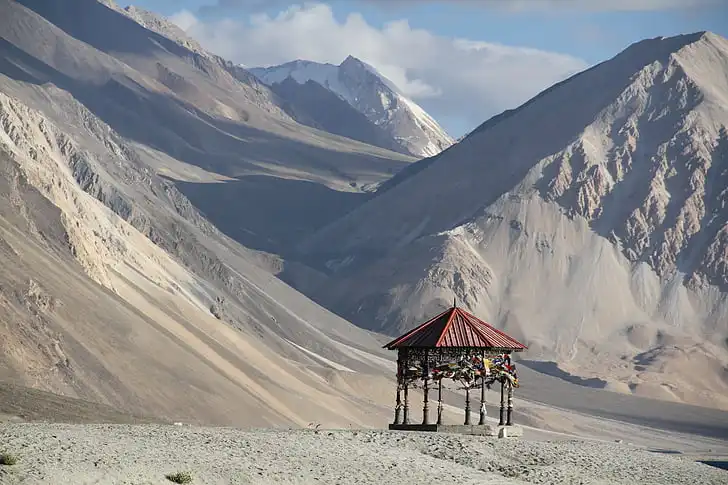
Nestled at an altitude of about 4,225 metres (13,862 feet) in the cold desert of Ladakh, Pangong Tso Lake is one of India’s most spectacular high-altitude lakes. Stretching across rugged mountains with its ever-changing shades of blue, Pangong has become a dream destination for travellers, photographers, and adventure enthusiasts. Beyond its breathtaking beauty, however, the lake holds immense geopolitical significance due to its location along the sensitive India-China border.

A Natural Wonder in the Himalayas
Pangong Tso, meaning “High Grassland Lake” in Tibetan, is approximately 134 kilometres long. What makes it unique is that nearly one-third of the lake lies in India, while the remaining two-thirds extends into Tibet, which is administered by China.
Unlike many freshwater lakes found in the Himalayas, Pangong Tso is a saltwater lake, making it unsuitable for drinking despite its crystal-clear appearance. During winter, temperatures often fall below -20°C, causing the lake to freeze completely, creating a surreal landscape.
The lake is surrounded by barren mountains, dramatic cliffs, and pristine valleys, offering visitors panoramic views unlike anywhere else in the world.

A Paradise for Tourists
Pangong Tso gained international fame after featuring in the Bollywood blockbuster 3 Idiots. Today, it is one of Ladakh’s most visited attractions. Popular activities include:
- Photography during sunrise and sunset
- Camping beside the lake
- Stargazing under crystal-clear skies
- Birdwatching, especially during summer
- Scenic road trips via Chang La Pass
- Exploring nearby villages like Spangmik, Man, and Merak
The changing colours of the lake—from turquoise and emerald green to deep blue—are among its biggest attractions. These colour variations occur due to sunlight, water depth, and mineral composition.
Wildlife Around Pangong
Despite its harsh climate, Pangong supports unique Himalayan wildlife. Visitors may spot:
- Black-necked cranes
- Bar-headed geese
- Brahminy ducks
- Himalayan marmots
- Kiang (Tibetan wild ass)
- Blue sheep in surrounding mountains
The region is also rich in rare alpine vegetation and serves as an important habitat for migratory birds during the summer months.
The Geopolitical Importance of Pangong Tso
Pangong Tso is not only a tourist attraction but also one of the most strategically important locations along the Line of Actual Control (LAC) between India and China.
The northern bank of the lake features several mountain spurs known as “Fingers”, numbered from Finger 1 to Finger 8. India considers the LAC to run up to Finger 8, while China claims it much farther west, creating overlapping territorial claims.
Because of these differing perceptions, Pangong Tso has witnessed several military stand-offs over the years. The most notable occurred in 2020, when troops from both countries engaged in a prolonged border confrontation in Eastern Ladakh. Since then, both nations have increased military infrastructure, surveillance, and troop deployment in the region while continuing diplomatic and military-level discussions to reduce tensions.
The lake’s geography makes it strategically significant for several reasons:
- It lies close to vital military routes in Eastern Ladakh.
- High mountain ridges provide commanding observation points.
- Patrol boats operate on the lake to monitor movement.
- Control over surrounding heights offers tactical advantages for surveillance and defence.
As a result, Pangong remains one of the most closely monitored sectors along the India-China border.
Best Time to Visit
The ideal time to visit Pangong Tso is between May and September, when roads remain open and temperatures are relatively comfortable.
During winter, the lake transforms into a frozen expanse, but heavy snowfall often makes travel challenging, and access may be restricted depending on weather conditions.
Travel Tips
- Indian citizens require an Inner Line Permit (ILP) to visit Pangong Tso.
- Foreign nationals need the necessary protected area permissions as per prevailing regulations.
- Spend a day acclimatising in Leh before travelling to reduce the risk of altitude sickness.
- Carry warm clothing throughout the year, as temperatures drop sharply after sunset.
- Respect local ecology by avoiding littering and following environmental guidelines.